





When Should My Baby See a Dentist for the First Time?
Your baby should see a dentist by their first birthday, or within about six months after the first tooth appears, whichever comes first. An early visit is mostly about prevention, gentle guidance for parents, and helping your child feel at home in a dental office.
At Dr. Lulu Pediatric Dentistry, we welcome infants, toddlers, and their parents in Scottsdale, AZ. Whether your baby has a brand-new tooth or none yet, this page explains what to expect and how to get ready.
Why Does a Baby Need a Dentist So Early?
Baby teeth matter. They help children chew and speak, and they hold space for the permanent teeth that follow. Cavities can start as soon as teeth appear, and early habits around feeding and cleaning have a lasting effect. An early visit helps by:
- Checking that teeth, gums, and the mouth are developing normally
- Catching early signs of decay before they become painful
- Teaching parents how to clean and protect baby teeth
- Answering questions about teething, feeding, pacifiers, and thumb-sucking
- Helping your child build trust with the dental team from the start
For more on this, read why your child’s first tooth needs a pediatric dentist and our parent’s guide to caring for baby teeth.
What Happens at a Baby’s First Dental Visit?
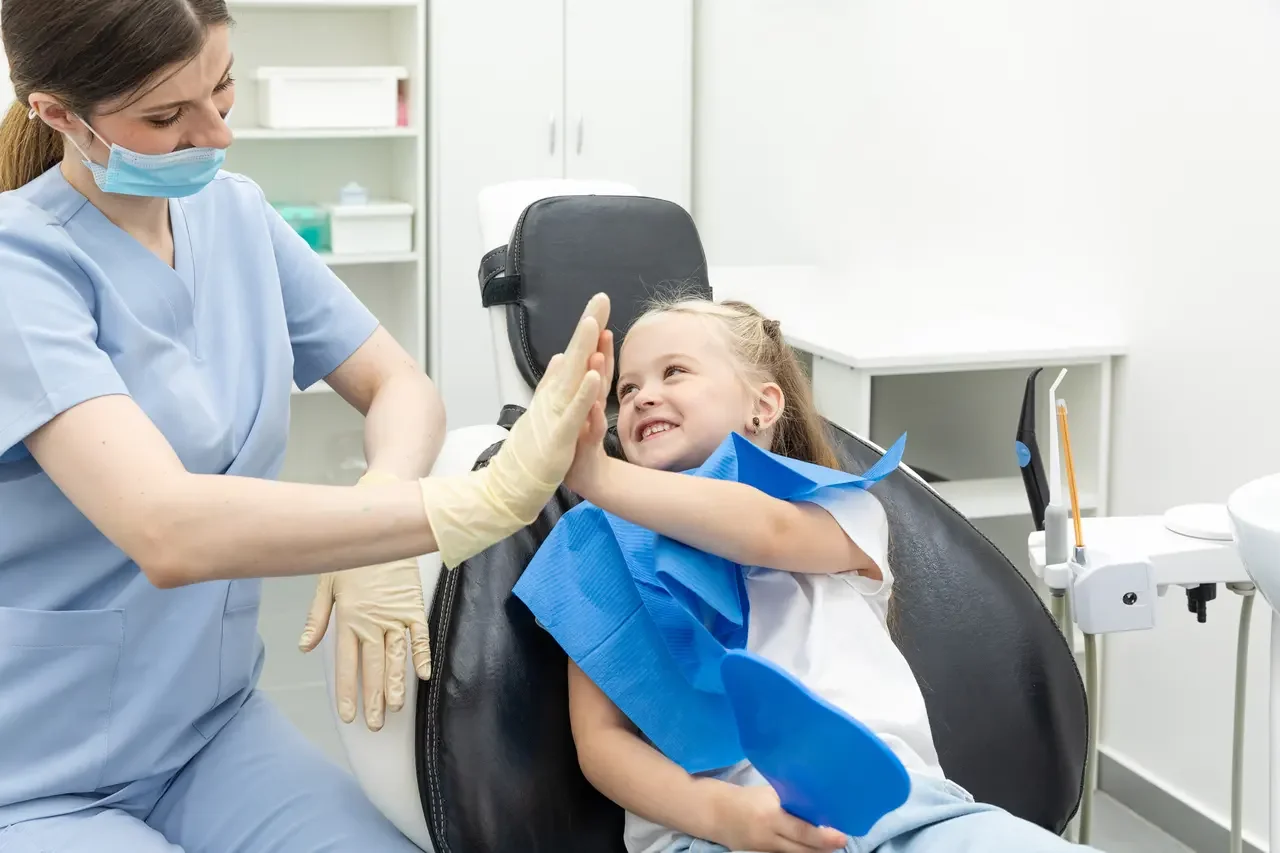
The first visit is short, gentle, and designed around your baby’s comfort. Here is what usually happens:
- Welcome and health history. We talk about your baby’s health, feeding habits, and any concerns you have.
- A gentle lap exam. For the youngest patients, the exam is often done in a "knee-to-knee" position, with your baby on your lap and then resting gently back across our knees so you stay close the whole time.
- Checking teeth, gums, and bite. We look at the teeth that have come in, the gums, the soft tissues of the mouth, and how things are developing.
- Cleaning as appropriate. Any teeth that have come in are gently cleaned.
- Fluoride, when appropriate. Depending on your child’s age and cavity risk, a small amount of fluoride may be applied to protect the teeth.
- Guidance for parents. We go over home care, nutrition, and what to expect next, and plan your next visit.
Dental X-rays are not usually needed at a first visit unless there is a specific concern. When they are recommended, you can read more about pediatric dental X-rays.
How Long Does the First Visit Take?
Visits for our youngest patients are kept brief and built around a baby’s attention span, nap schedule, and feeding times. It is normal for an infant to fuss or cry, and it does not mean the visit went poorly. Our team works at your baby’s pace and keeps you close.
When Do Baby Teeth Come In?
Every child is on their own schedule, but a typical pattern looks like this:
- The first tooth often appears around six months, though some babies get one earlier or later
- The lower front teeth usually come in first, followed by the upper front teeth
- By their first birthday, some babies have several teeth and others have none, and both can be normal
- Most children have all 20 baby teeth by about age three
- Permanent teeth begin to arrive around age six
If your child has no teeth well past their first birthday, mention it at your visit so we can check development.
Teething: What Helps and What to Avoid
Teething can make babies fussy, drooly, and eager to chew. Safe ways to ease discomfort include:
- A clean, chilled teething ring or a cool, damp washcloth
- Gently rubbing the gums with a clean finger
- Extra cuddles and distraction during fussy times
Some popular products are best avoided. The FDA recommends against:
- Teething gels and creams that contain benzocaine for children under age two, because of a rare but serious risk
- Teething necklaces, bracelets, and other jewelry, because they can be choking and strangulation hazards
If your baby seems very uncomfortable or you are unsure whether teething is the cause, check with your pediatrician or dentist.
How to Care for Your Baby’s Teeth at Home
Good habits can start before the first tooth even appears:
- Wipe your baby’s gums with a soft, clean cloth after feedings
- Once the first tooth comes in, brush twice a day with a soft infant toothbrush
- Use a smear of fluoride toothpaste about the size of a grain of rice for children under three, and a pea-sized amount from ages three to six
- Begin flossing once two teeth touch
- Help and supervise brushing until your child can do a thorough job on their own
Bottles, Pacifiers, and Thumb-Sucking
Feeding and comfort habits can affect baby teeth. A few simple guidelines help:
- Do not put your baby to bed with a bottle of milk, formula, or juice, since sugars sitting on the teeth overnight can lead to early childhood cavities
- Introduce a cup around the first birthday and move away from the bottle over the following months
- Limit juice and sugary drinks, and see our guide to healthy snack and drink choices for kids
- Never dip a pacifier in sugar or honey
- Most children outgrow pacifiers and thumb-sucking on their own, but let us know if the habit continues past about age three or four, since it can affect how the teeth and bite develop
How to Prepare for Your Baby’s First Visit
A little planning goes a long way:
- Schedule around your baby’s naps and feeding times
- Review the forms and new patient information on our Patient Info page
- Write down questions about teething, feeding, and brushing
- Bring your insurance information and a comfort item such as a blanket or toy
- Stay calm and positive, because babies and toddlers pick up on your mood
For older toddlers, reading a children’s book about the dentist or playing dentist at home can help. If your child is anxious or sensitive to new places and sounds, let us know ahead of time and see our approach to special needs and anxious children dentistry.
Preventive Care After the First Visit
After the first visit, regular checkups, typically about every six months, keep your child’s teeth and habits on track. As more teeth come in, your child may benefit from dental cleanings and fluoride treatments and, later, dental sealants to protect the grooves of the back teeth. Regular visits also mean problems are found early, when they are easiest to treat.
Insurance and Cost Factors for a First Visit
Costs for a first dental visit vary depending on the services provided and your insurance. Many dental plans cover preventive visits for children, but benefits differ, so it is worth checking your plan. Our team can review what to expect and answer insurance questions when you schedule.
Pediatric Expertise You Can Trust
A baby’s first dental visit sets the tone for years of dental care. Dr. Lulu Molina and our team focus on prevention, patience, and clear communication with parents, so even the youngest patients and their families leave feeling confident and cared for.
Frequently Asked Questions
What age should my baby first see a dentist?
By their first birthday, or within about six months after the first tooth comes in, whichever comes first. Early visits focus on prevention and helping you protect your baby’s teeth.
What if my baby has no teeth by their first birthday?
That can be completely normal, since some babies get their first tooth later. A visit is still helpful, because we can check development and give you guidance for when the first tooth arrives.
Will my baby cry at the first visit?
Some babies do, and that is okay. Visits are short and gentle, you stay close, and our team works at your baby’s pace.
Can I stay with my baby during the visit?
Yes. For infants and toddlers, parents are involved in the exam, which is often done with your baby on your lap.
Does my baby need X-rays at the first visit?
Usually not. X-rays are recommended only when there is a specific concern, and our team will explain why if one is needed.
Is fluoride safe for babies?
Fluoride is used in small, carefully measured amounts for young children. At home that means a rice-sized smear of fluoride toothpaste for children under three. Our team can talk through what is right for your baby’s age and cavity risk, and you can read more about children’s cleanings and fluoride.
What if my toddler is scared of the dentist?
That is very common. Let us know about your child’s worries ahead of time, and we can slow down, explain each step simply, or start with a short introductory visit to build comfort.
Schedule Your Baby’s First Dental Visit
Ready to get your child started on a healthy smile? We welcome families across Scottsdale, McCormick Ranch, DC Ranch, Grayhawk, and Scottsdale Ranch. Call (480) 955-5858%20955-5858) or request a visit through our Book Appointment page.